Boosting Decision Making
Boosting: Empowering Citizens Through Behavioral Science
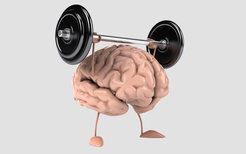
Today’s world is complex, uncertain, and highly digital. Industries like food and tech have transformed people’s everyday environments, often to maximize profit rather than prioritize well-being, fueling a rise in obesity and social media addiction. Regulation is needed to address these challenges, but policymakers also have additional tools at their disposal: programs and interventions that help people navigate such toxic environments. Boosting is one such approach, aimed at building people’s competences so they can make informed decisions by and for themselves.
A boost is a transparent intervention—such as a rule of thumb, simple decision aid, or brief training session—that strengthens competencies like risk literacy, self-control, or critical evaluation of information. Unlike nudges, which tend to steer people’s behavior by redesigning their choice environments, boosts treat people as capable learners and invest in their capabilities. One type of boost, called self-nudging, helps people design their own environments and habits, similar to the way policymakers design public spaces. For example, you might keep cookies at the back of a top shelf to resist sugar cravings, or turn off smartphone notifications to protect your valuable attention.
Here we highlight boosts in artificial intelligence (AI) and health. For more examples, visit https://scienceofboosting.org and ARC’s research area “Cognition in Online Environments”.
Boosting AI Competences and Human–AI Collaboration
AI is increasingly shaping decisions in medicine, employment, finance, and public services. Our research investigates how AI can support—rather than undermine—human judgment, learning, and autonomy, by addressing two central questions:
- When do AI systems enhance, rather than erode, human competences? Whether the AI is a large language model or a complex prediction algorithm, the core problem is opacity: Without knowing which features drive a prediction and how, people cannot tell a sensible model from a flawed one. We argue that simple and transparent AI models should be preferred wherever feasible. A simple financial decision tree that reveals exactly how it identifies banks at risk of failure, for instance, allows experts to check its rules, catch its mistakes, and ultimately internalize its logic well enough to make accurate judgments without AI assistance.
- When do humans and AI perform better together than either could alone, creating human–AI synergy? We argue that people need learning opportunities—such as feedback—to learn when to follow the advice of AI, when to question it, and when to override it.
Boosting Health Behavior
People often make decisions that affect their health in environments and social contexts that favor short-term rewards over long-term well-being. Fast food is a prime example—it’s quick, tasty, and hard to resist, even though healthier options would be better in the long run. Our work on boosting health behavior focuses on building competencies that help people act in their own interests. We test simple boosts in natural settings—showing, for example, that extending family mealtimes improves children’s fruit and vegetable intake. To get these interventions right, we also need to rethink how food decisions are defined and measured in the first place. Across projects, we aim to develop low-cost, scalable boosts—such as routines and planning strategies—that can be rolled out in larger settings like schools to support healthier everyday choices that do not depend on sheer willpower.
References
Berger, J., Burton, J. W., Hertwig, R., Kosch, T., Kurvers, R. H. J. M., Kurzenberger, B., Lazik, C., Onnasch, L., Rieger, T., Thoma, A. I., Wulff, D. U., & Herzog, S. M. (2025). Fostering human learning is crucial for boosting human-AI synergy (arXiv:2512.13253). arXiv. https://doi.org/10.48550/arXiv.2512.13253
Claassen, M. A., Mata, J., & Hertwig, R. (2025). The (mis-)measurement of food decisions. Appetite, 209, 107928. https://doi.org/10.1016/j.appet.2025.107928
Dallacker, M., Knobl, V., Hertwig, R., & Mata, J. (2023). Effect of longer family meals on children’s fruit and vegetable intake: A randomized clinical trial. JAMA Network Open, 6(4), e236331. https://doi.org/10.1001/jamanetworkopen.2023.6331
Hertwig, R., & Grüne-Yanoff, T. (2017). Nudging and boosting: Steering or empowering good decisions. Perspectives on Psychological Science, 12(6), 973–986. https://doi.org/10.1177/1745691617702496
Herzog, S. M., & Franklin, M. (2024). Boosting human competences with interpretable and explainable artificial intelligence. Decision, 11(4), 493–510. https://doi.org/10.1037/dec0000250
Herzog, S. M., & Hertwig, R. (2025). Boosting: Empowering citizens with behavioral science. Annual Review of Psychology, 76, 851–881. https://doi.org/10.1146/annurev-psych-020924-124753
Reijula, S., & Hertwig, R. (2022). Self-nudging and the citizen choice architect. Behavioural Public Policy, 6(1), 119–149. https://doi.org/10.1017/bpp.2020.5