Max Planck Dahlem Campus of Cognition (MPDCC)

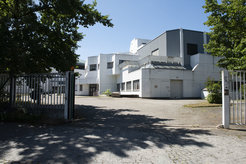
The Max Planck Dahlem Campus of Cognition (MPDCC) is the central research infrastructure of the Max Planck Institute for Human Development (MPIB). The campus was created to provide a state-of-the-art laboratory infrastructure for cutting-edge research in cognitive science, cognitive neuroscience, and developmental psychology. At the same time, it acts as a vibrant research hub for scientific exchange and collaboration - locally in Berlin as well as nationally and internationally.
On 2,700 square meters, the MPDCC not only offers office space and laboratories for MPIB scientists, but also for integrated campus research groups and international guests. Our goal is to create an outstanding environment that promotes the training and promotion of the next generation of top researchers.
With the Max Planck Dahlem Campus of Cognition, the Max Planck Institute for Human Development offers a unique platform for first-class education and interdisciplinary collaboration. The campus is home to three renowned international doctoral programs:
- Max Planck School of Cognition,
- International Max Planck Research School on Computational Psychiatry and Ageing Research
- International Max Planck Research School on the Life Course.
Our vibrant scientific community is strengthened by colloquium series, lectures and workshops that promote the exchange of ideas and collaboration. We are supported by an experienced laboratory team that accompanies studies in organization, recruitment and data collection. In addition, we offer a guest program for international scientists, which enables both short and longer-term stays at the MPDCC.
Learn more about our guest program.
Contact us:
Are you interested in the visiting scientist program? Or would you like to learn more about the research and laboratory infrastructure at the MPDCC? Please contact the MPDCC office at sekcampus@mpib-berlin.mpg.de (Laureen Krüger).